012 / 012
Scroll
About
Born in Penzance, Cornwall, on 6 October 1958. Forty years on set.
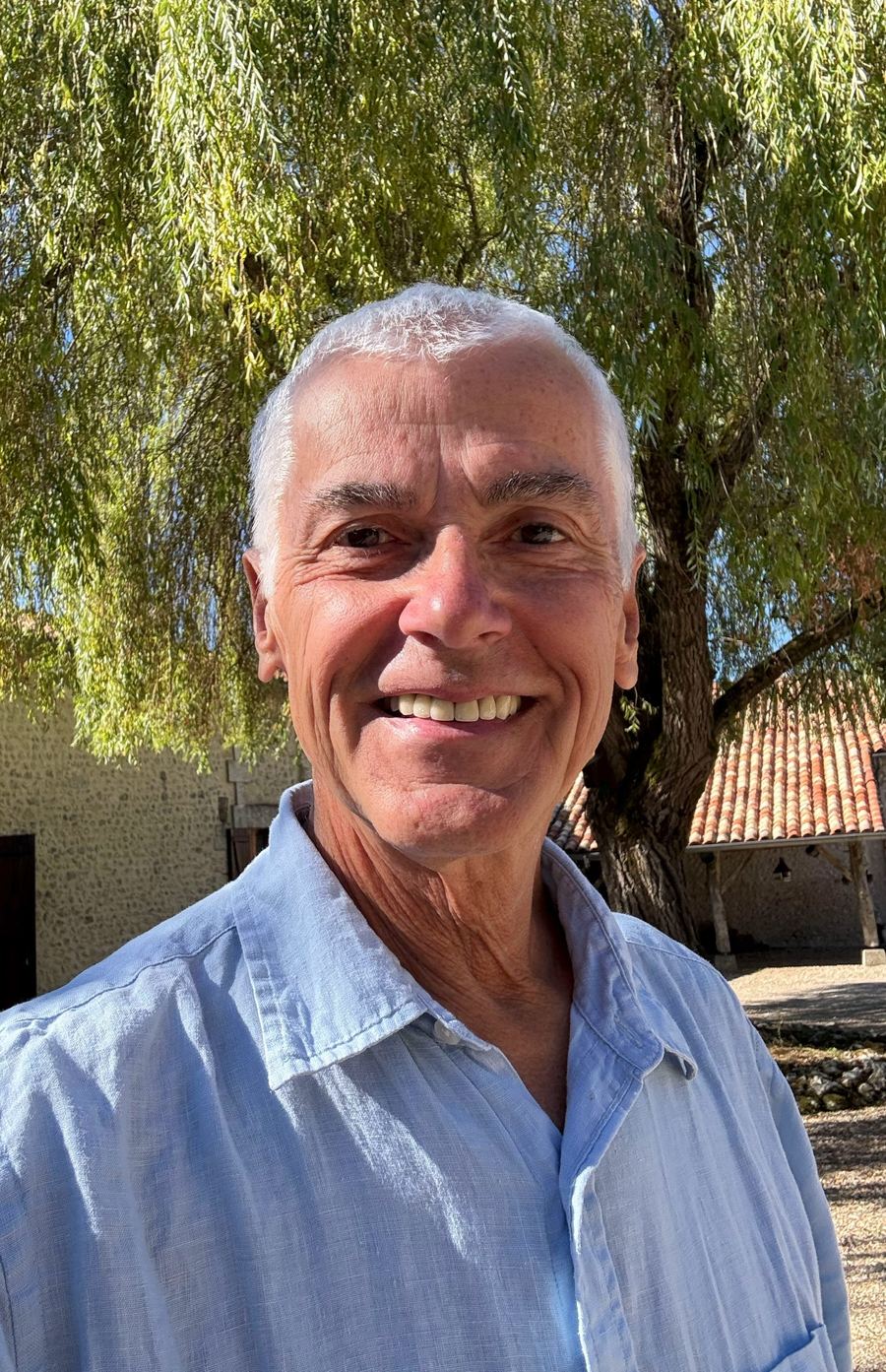
Born in Penzance, Cornwall, on 6 October 1958, John has spent more than forty years recording sound for film and television, on location in forty-eight places around the world, from Greenland to Jordan.
John Rodda found location sound by accident. At twenty he was working on a farm on the north coast of Cornwall when his boss inherited money and decided to make a film. John was on the crew.
Two years later he went freelance and moved to Bristol. Corporate video, news, documentaries and current affairs led him into television drama and feature films, from Longitude and The Lost Prince to 28 Days Later, Pearl Harbor and Bridgerton.
The work has taken him a long way from Cornwall. Shackleton was shot in London, Iceland and Greenland. The award-winning Black Mirror episode “USS Callister” was made in twenty days, including location work in Lanzarote.
He is a full member of the Association of Motion Picture Sound and has led its Technical Awards group. He now lives in France, and speaks reasonably good French.
Timeline
- 1958Born in Penzance, Cornwall
- Age 20First film, made on a North Cornwall farm
- Age 22Goes freelance and moves to Bristol
- 1984Sound assistantSurprise Surprise!
- 1998BAFTA, Best Sound (Factual)Airport, BBC
- 2001Pearl HarborMichael Bay
- 200228 Days LaterDanny Boyle
- 2018CAS and AMPS awards, BAFTA nominationBlack Mirror, “USS Callister”
- 2020Leads the AMPS Technical Awards group
- 2024Supervising production sound mixerBridgerton
We’re film-makers first and foremost, and this is a creative endeavour.
We are there to help the director tell his story to the very best of our ability.
Forty-eight locations
America, Angola, Antigua, Austria, Belgium, Bulgaria, the Canaries, the Cayman Islands, the Congo, Croatia, Cyprus, the Czech Republic, Denmark, England, France, Germany, Greenland, Guadeloupe, Holland, Hong Kong, Hungary, Ibiza, Iceland, India, Ireland, Italy, Jamaica, Jordan, Luxembourg, Madeira, Majorca, Malaysia, Malta, Menorca, Monaco, Morocco, Poland, Portugal, Russia, Scotland, Senegal, Serbia, Slovakia, Spain, Switzerland, Tunisia, Turkey and Wales.
“…and I speak reasonably good French.” – John Rodda
How he works
01
Ready. Always.
Every main piece of equipment lives on one purpose-built stainless-steel trolley: recorder on top, mixer below, radio receivers beneath, headphone feeds for the director and continuity built in. Nothing to fetch, nothing to rig. Twenty-two inches square and thirty high, it slots into the back of a car.
02
Invisible microphones
Radio mics small enough to vanish into an artiste’s costume, mixed to sound natural and balanced: virtually indistinguishable from an open microphone, yet clearer in noisy locations or when a scene is covered in a single wide shot.
03
The boom
Schoeps capsules under an inch and a half long: swung on the boom, cordless with a transmitter under low ceilings, or hidden on a table. Sennheiser 416s and 816s with Rycote suspensions and windjammers for everything else.
04
Playback, unheard
In-ear monitors let performers hear playback that never reaches the soundtrack. Laptop playback for instant cueing. A timecode Digislate, frame-accurate at up to 250 feet from the desk.
05
For the edit
Rushes go to the editors on robust cards, while a complete archive of the project – production sound, wild tracks and playback – is built up over the shoot for backup and audio post.
06
A lead for anything
More than thirty-five years in film and television have filled the cart: playback speakers, a well-stocked spares kit and a lead for anything.
The cart today
- Sound Devices Scorpio
- Mixer-recorder at the heart of the cart, chosen to last five to ten years.
- Audio Limited A20
- Sixteen channels of radio through the Nexus. John has been an Audio Ltd customer since the 1980s.
- Wisycom
- Shark-fin antennas, powered through the Nexus.
- Boom Recorder
- Timecode-locked backup on a laptop, fed over Dante.
John Rodda CAS AMPS